
A Complete Guide for Business Growth and Success
Social Media Marketing Strategy for Business Growth
Learn how a strong Social Media Marketing Strategy and Content Strategy can help grow your business, build trust, and increase engagement.
Introduction

Every successful brand has one thing in common. It creates content that connects with people and delivers value consistently. Whether you are a small business owner, freelancer, startup founder, or marketing professional, understanding the content creation process can help you build a stronger online presence and attract the right audience
A well planned Social Media Marketing Strategy is no longer just an option. It plays an important role in building brand awareness, increasing engagement, and generating business opportunities. However, posting random content without a clear direction rarely produces meaningful results. This is where a strong Content Strategy becomes essential.
This guide explains the complete content creation process and shows how it supports long term business success.
Table of Contents
- Understanding the Content Creation Process
- Why Content Matters for Business Growth
- Building a Strong Social Media Marketing Strategy
- Creating an Effective Content Strategy
- Understanding Your Target Audience
- Content Planning and Research
- Content Creation Best Practices
- Content Distribution and Promotion
- Measuring Content Performance
- Common Content Marketing Mistakes
- Practical Case Study
- Frequently Asked Questions
- Conclusion
- Call to Action
Understanding the Content Creation Process
Blog Articles
Educational content that helps users find answers and solutions.
Social Media Posts
Content designed to increase engagement and build brand awareness.
Videos
Visual content that improves audience retention and communication.
Infographics
Easy to understand visual representations of information.
Email Content
Personalized communication that nurtures customer relationships.
The goal is not simply to publish content. The goal is to provide useful information that solves problems and builds trust.
Why Content Matters for Business Growth
Consumers often research products and services before making decisions. Businesses that consistently publish valuable content have a greater chance of earning trust and attracting qualified customers.
Some key benefits include:
Improved Brand Visibility
Quality content helps businesses appear in search results and social media feeds more frequently.
Increased Audience Trust
Helpful content positions a business as a reliable source of information.
Better Customer Engagement
People are more likely to interact with content that addresses their interests and challenges.
Higher Conversion Opportunities
Educated audiences often make faster and more confident purchasing decisions.
Building a Strong Social Media Marketing Strategy
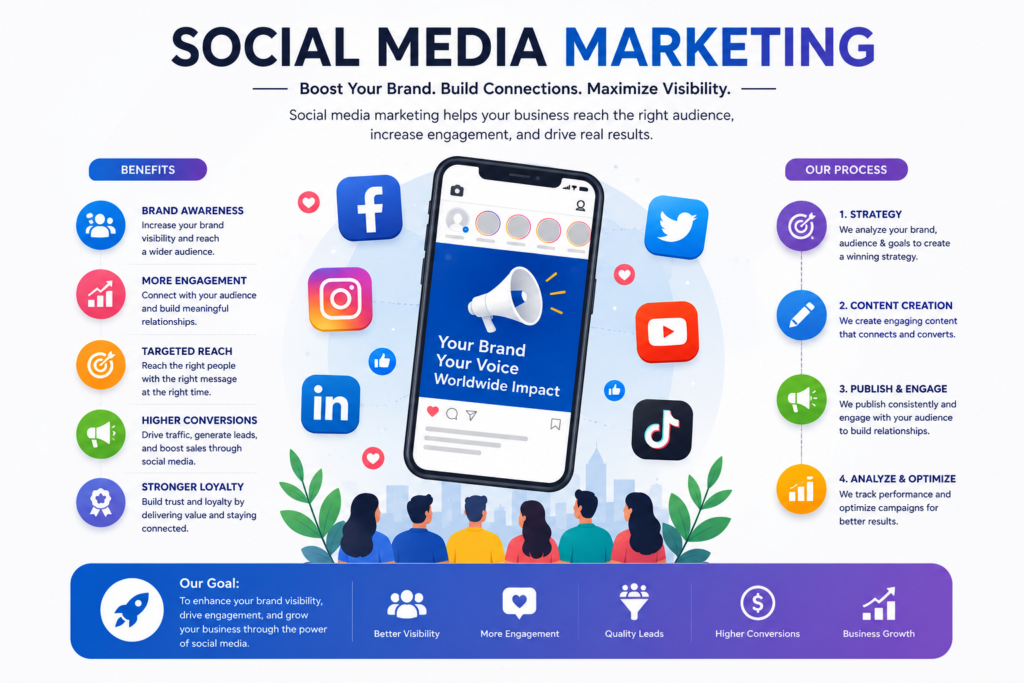
A successful Social Media Marketing Strategy starts with clear objectives.
Ask yourself:
- What is the primary goal?
- Brand awareness
- Lead generation
- Website traffic
- Sales growth
- Community building
Once goals are defined, choose platforms that match your audience behavior.
For example:
- Instagram works well for visual brands.
- LinkedIn is effective for B2B businesses.
- Facebook supports community engagement.
- YouTube is ideal for educational and long form content.
The biggest mistake many businesses make is trying to be active everywhere instead of focusing on platforms where their audience spends time.
Creating an Effective Content Strategy

A Content Strategy acts as a roadmap for content creation and distribution.
An effective strategy includes:
Audience Research
Understand audience needs, interests, and challenges.
Content Goals
Define measurable objectives.
Content Formats
Choose blogs, videos, reels, infographics, or email campaigns.
Publishing Schedule
Maintain consistency through a content calendar.
Performance Tracking
Measure engagement, traffic, leads, and conversions.
Businesses with documented content strategies often experience better consistency and stronger results.
Understanding Your Target Audience
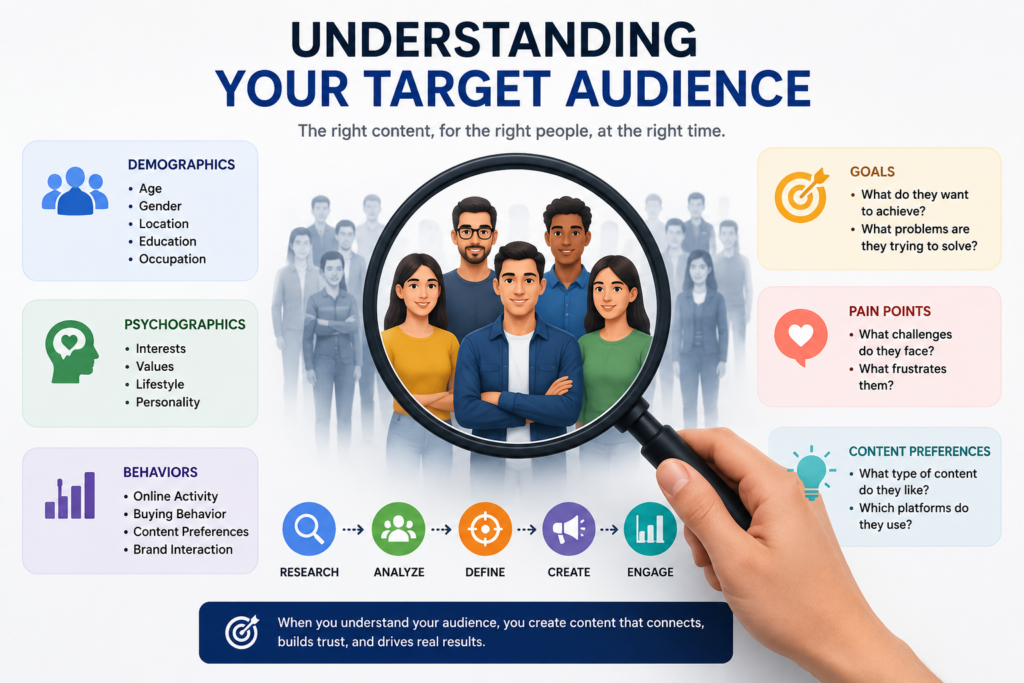
One of the most important parts of content creation is understanding who you are speaking to.
Consider:
- Age group
- Interests
- Problems
- Online behavior
- Preferred content formats
For example, younger audiences may engage more with short videos and interactive content, while professionals may prefer detailed guides and industry insights.
When content reflects audience needs, engagement naturally improves.
Content Planning and Research
Successful content begins before writing starts.
Research should include:
Keyword Research
Identify topics your audience is actively searching for.
Competitor Analysis
Study what is working within your industry.
Trend Monitoring
Stay updated with industry developments and audience interests.
Customer Questions
Use real customer inquiries as content inspiration.
This approach ensures content remains relevant and useful.
Content Creation Best Practices


Md Asif
Director OPS
To create high quality content:
- Focus on solving real problems.
- Use clear and simple language.
- Include examples whenever possible.
- Support claims with practical insights.
- Maintain consistency in publishing.
The most successful content often educates first and promotes second.
Content Distribution and Promotion
Creating content is only half the process.
Promotion methods include:
- Social media sharing
- Email newsletters
- SEO optimization
- Community engagement
- Strategic partnerships
Strong distribution increases visibility and extends content reach.
Measuring Content Performance
Key metrics include:
- Website traffic
- Engagement rate
- Click through rate
- Lead generation
- Conversion rate
Regular analysis helps identify what works and where improvements are needed.
Common Content Marketing Mistakes
Posting Without a Strategy
Random posting often leads to inconsistent results.
Ignoring Audience Needs
Content should focus on audience interests rather than only business promotions.
Inconsistent Publishing
Irregular posting reduces audience engagement.
Neglecting Analytics
Without tracking performance, improvement becomes difficult.
Mini Case Study
One client in the service industry struggled to generate leads despite regular posting.
After implementing a structured Social Media Marketing Strategy, improving audience targeting, and creating educational content focused on customer problems, engagement increased significantly within a few months. Website traffic improved, lead quality increased, and conversion rates showed measurable growth.
The biggest improvement came from understanding audience intent rather than simply increasing posting frequency.
Lorem ipsum dolor sit amet, consectetur adipiscing elit. Ut elit tellus, luctus nec ullamcorper mattis, pulvinar dapibus leo.
Frequently Asked Questions

What is a Social Media Marketing Strategy?
Lorem ipsum dolor sit amet, consectetur adipiscing elit. Ut elit tellus, luctus nec ullamcorper mattis, pulvinar dapibus leo.
Why is Content Strategy important?
A Content Strategy helps businesses create consistent, relevant, and goal oriented content.
How often should businesses publish content?
Consistency matters more than frequency. A realistic publishing schedule should be maintained.
Which platform is best for business marketing?
The best platform depends on where the target audience spends time.
How can content improve business growth?
Quality content builds trust, increases visibility, attracts potential customers, and supports long term growth.
Conclusion
The content creation process is much more than publishing posts or writing articles. It involves research, planning, execution, promotion, and continuous improvement. A strong Social Media Marketing Strategy combined with a clear Content Strategy helps businesses connect with their audience, build credibility, and achieve sustainable growth.
Businesses that focus on providing genuine value through content often develop stronger relationships with customers and create long term opportunities for success.
Call To Action

If you want to improve your content performance, start by reviewing your current strategy, understanding your audience, and creating content that solves real problems. Small improvements made consistently can produce meaningful results over time.